Voici l’embauche d'un petit projet pour faire soit même un Drone Keeper pour ça il vous faut :
Un arduino 328 en 5v ou 3v :
http://www.banggood.com/Wholesale-New-V ... 68534.html
Un gyroscope (compatible 5v) :
http://www.banggood.com/6DOF-MPU-6050-3 ... 80862.html
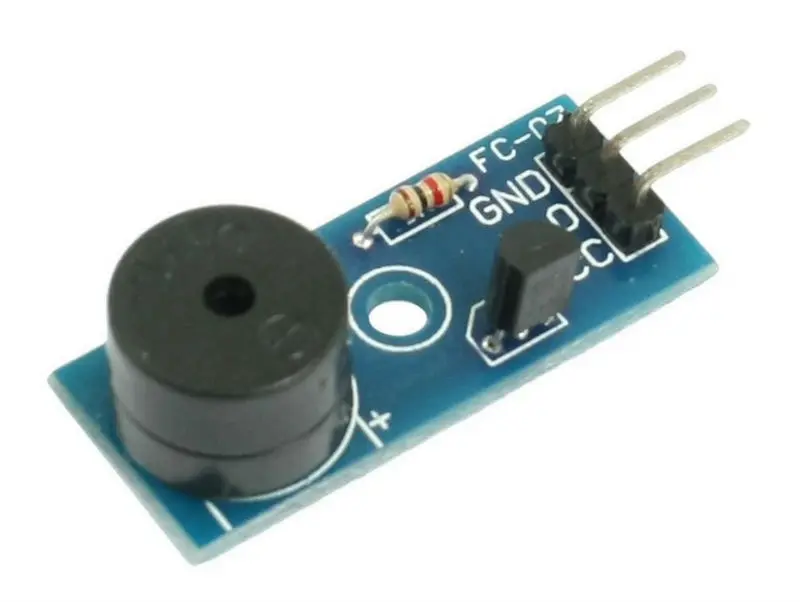
Un buzzer :
http://www.banggood.com/DC-1-30V-2-Pins ... 78657.html
Une lipo 1s, peu importe le modèle
Un convertisseur TTL RS232 sinon un arduino en usb
Source :
http://playground.arduino.cc/Main/MPU-6050
Schéma :

Donc on a notre GY-521
VCC -> VCC
GND -> GND
SCL -> A5
SDA -> A4
INT -> 2
Notre Buzzer :
+ -> pin 13
- -> GND
Pour finir on installe le soft Arduino:
https://www.arduino.cc/en/Main/Software
On connecte notre TTL RS232 à l'arduino comme pour un UART d'un contrôleur de vol (on croise RX/TX)
Une fois connecté au PC le Port COM apparait , on le renseigne dans le soft Arduino
- le bon modèle : "Arduino mini"
- Processeur ATmega328
- le bon port com
Pour injecter le code il faut la bibliothèque "MPU-6050 Accelerometer + Gyro" et le code :
https://mega.nz/#!6ZQASBDB!Y83cdJ_i4ZvC ... TLfSI5Aegg
Code : Tout sélectionner
void buzz(int targetPin, long frequency, long length) {
  long delayValue = 1000000/frequency/2;
  long numCycles = frequency * length/ 1000;
  for (long i=0; i < numCycles; i++)
  {
    digitalWrite(targetPin,HIGH);
    delayMicroseconds(delayValue);
    digitalWrite(targetPin,LOW);
    delayMicroseconds(delayValue);
  }
}

    void setup()
    {
      int error;
      uint8_t c;


      Serial.begin(9600);
      Serial.println(F("InvenSense MPU-6050"));
      Serial.println(F("June 2012"));

      // Initialize the 'Wire' class for the I2C-bus.
      Wire.begin();


      // default at power-up:
      //    Gyro at 250 degrees second
      //    Acceleration at 2g
      //    Clock source at internal 8MHz
      //    The device is in sleep mode.
      //

      error = MPU6050_read (MPU6050_WHO_AM_I, &c, 1);
      Serial.print(F("WHO_AM_I : "));
      Serial.print(c,HEX);
      Serial.print(F(", error = "));
      Serial.println(error,DEC);

      // According to the datasheet, the 'sleep' bit
      // should read a '1'.
      // That bit has to be cleared, since the sensor
      // is in sleep mode at power-up.
      error = MPU6050_read (MPU6050_PWR_MGMT_1, &c, 1);
      Serial.print(F("PWR_MGMT_1 : "));
      Serial.print(c,HEX);
      Serial.print(F(", error = "));
      Serial.println(error,DEC);


      // Clear the 'sleep' bit to start the sensor.
      MPU6050_write_reg (MPU6050_PWR_MGMT_1, 0);
    }

    int mouvement=0;
    int old_accel_x=0;
    int old_accel_y=0;
    int old_accel_z=0;
    int counttime=0;

    void loop()
    {
      int error;
      double dT;
      accel_t_gyro_union accel_t_gyro;


      Serial.println(F(""));
      Serial.println(F("MPU-6050"));

      // Read the raw values.
      // Read 14 bytes at once,
      // containing acceleration, temperature and gyro.
      // With the default settings of the MPU-6050,
      // there is no filter enabled, and the values
      // are not very stable.
      error = MPU6050_read (MPU6050_ACCEL_XOUT_H, (uint8_t *) &accel_t_gyro, sizeof(accel_t_gyro));
      Serial.print(F("Read accel, temp and gyro, error = "));
      Serial.println(error,DEC);


      // Swap all high and low bytes.
      // After this, the registers values are swapped,
      // so the structure name like x_accel_l does no
      // longer contain the lower byte.
      uint8_t swap;
      #define SWAP(x,y) swap = x; x = y; y = swap

      SWAP (accel_t_gyro.reg.x_accel_h, accel_t_gyro.reg.x_accel_l);
      SWAP (accel_t_gyro.reg.y_accel_h, accel_t_gyro.reg.y_accel_l);
      SWAP (accel_t_gyro.reg.z_accel_h, accel_t_gyro.reg.z_accel_l);
      SWAP (accel_t_gyro.reg.t_h, accel_t_gyro.reg.t_l);
      SWAP (accel_t_gyro.reg.x_gyro_h, accel_t_gyro.reg.x_gyro_l);
      SWAP (accel_t_gyro.reg.y_gyro_h, accel_t_gyro.reg.y_gyro_l);
      SWAP (accel_t_gyro.reg.z_gyro_h, accel_t_gyro.reg.z_gyro_l);


      // Print the raw acceleration values
     /*
      Serial.print(F("accel x,y,z: "));
      Serial.print(accel_t_gyro.value.x_accel, DEC);
      Serial.print(F(", "));
      Serial.print(accel_t_gyro.value.y_accel, DEC);
      Serial.print(F(", "));
      Serial.print(accel_t_gyro.value.z_accel, DEC);
      Serial.println(F(""));
     */

      //init diff 0
     if(old_accel_x != 0)
     {
      //test change
      int differencex = abs(old_accel_x - accel_t_gyro.value.x_accel);
      int differencey = abs(old_accel_y - accel_t_gyro.value.y_accel);
      int differencez = abs(old_accel_z - accel_t_gyro.value.z_accel);

      if(differencex > 1000 || differencey > 1000 || differencez > 1000)
      mouvement=1;
      else
      mouvement=0;
     }


    old_accel_x=accel_t_gyro.value.x_accel;
    old_accel_y=accel_t_gyro.value.y_accel;
    old_accel_z=accel_t_gyro.value.z_accel;

      // The temperature sensor is -40 to +85 degrees Celsius.
      // It is a signed integer.
      // According to the datasheet:
      //   340 per degrees Celsius, -512 at 35 degrees.
      // At 0 degrees: -512 - (340 * 35) = -12412

     /*
      Serial.print(F("temperature: "));
      dT = ( (double) accel_t_gyro.value.temperature + 12412.0) / 340.0;
      Serial.print(dT, 3);
      Serial.print(F(" degrees Celsius"));
      Serial.println(F(""));
     */

      // Print the raw gyro values.
     /*
      Serial.print(F("gyro x,y,z : "));
      Serial.print(accel_t_gyro.value.x_gyro, DEC);
      Serial.print(F(", "));
      Serial.print(accel_t_gyro.value.y_gyro, DEC);
      Serial.print(F(", "));
      Serial.print(accel_t_gyro.value.z_gyro, DEC);
      Serial.print(F(", "));
      Serial.println(F(""));
     */

      if(mouvement == 0)
      {
        if(counttime >3)
        {
        buzz(13, 500, 500); // buzz sur pin 4 à 2500Hz
         delay(500);
        buzz(13, 800, 500); // buzz sur pin 4 à 2500Hz
           delay(500);
        buzz(13, 1000, 500); // buzz sur pin 4 à 2500Hz
          delay(500);
        buzz(13, 1300, 500); // buzz sur pin 4 à 2500Hz
         delay(500);
        buzz(13, 1800, 500); // buzz sur pin 4 à 2500Hz
         delay(500);
        buzz(13, 2000, 500); // buzz sur pin 4 à 2500Hz
          delay(500);
        buzz(13, 2500, 500); // buzz sur pin 4 à 2500Hz


        }
      }

      counttime++;

      delay(1000);

    }
Je suis parti de l'exemple du site arduino et j'ai rajouté un test toutes les secondes qui va comparer les dernières valeurs de X , Y et Z
Si on bouge plus ça sonne.
J'ai mis plusieurs fréquences sur le buzzer pour chercher celle qui s’entend le plus loin.
Prochaine étape miniaturiser tout ça.